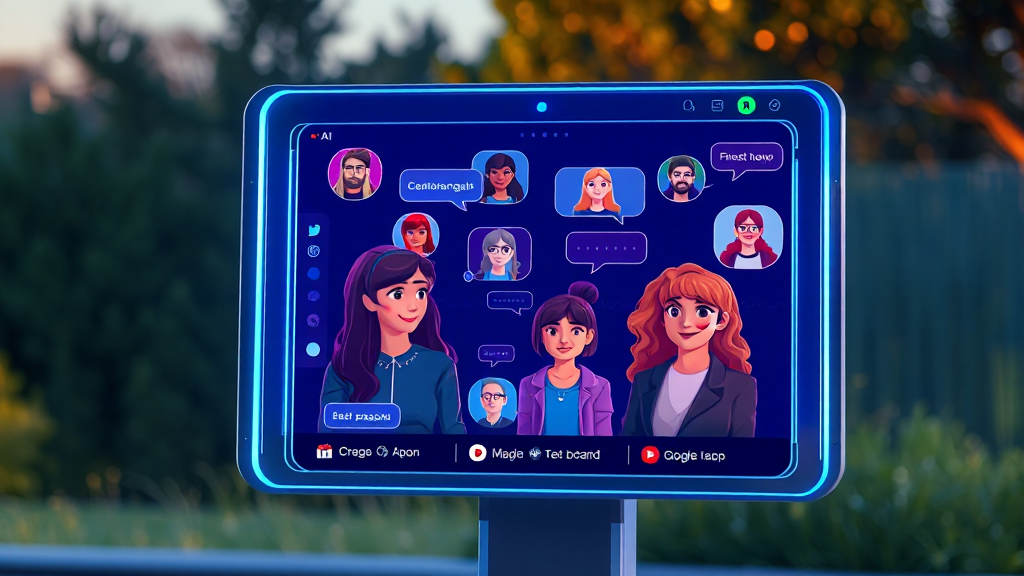
CrushOn AI: How Character-Based Chat Is Reshaping Digital Conversation
Conversational AI has moved far beyond simple question-and-answer tools. Today, users want personality, memory, and a sense of continuity in their digital interactions. That shift is exactly what CrushOn AI addresses, offering a platform where character-driven conversations feel less like querying a database and more like talking with someone who has a distinct voice. Instead of generic responses, the experience centers on crafted personas that maintain tone, background, and context across a session.
This article explores what makes character-based AI chat compelling, how the technology works, where it fits into everyday use, and what to consider before diving in. Whether you are curious about entertainment, creative writing, language practice, or simply want a more engaging conversational partner, understanding the mechanics behind these platforms helps you get more out of them.
What Is CrushOn AI and Why Character Chat Matters
CrushOn AI is a platform built around interactive personas. Rather than a single assistant with a fixed personality, it hosts a range of characters, each with their own backstory, speech patterns, and areas of interest. Users select a character and begin an ai character chat that unfolds naturally over time. The appeal is straightforward: people connect more easily with a conversation that has emotional texture and consistency.
Traditional chatbots often reset after each exchange, losing the thread of what was said earlier. Character-based systems are designed to remember context, which makes longer conversations feel coherent. That continuity is what turns a novelty into something users return to. It also opens up creative possibilities, from roleplay scenarios to collaborative storytelling, where the AI contributes ideas rather than just reacting to prompts.
The rise of this format reflects a broader trend in how people relate to technology. We increasingly expect digital tools to be personable, not just functional. Character chat sits at the intersection of entertainment and utility, and that combination is why it has gained traction so quickly.
How Character-Based AI Chat Actually Works
At a technical level, character chat platforms rely on large language models fine-tuned or prompted to adopt specific personas. Each character has a defined profile: a name, a personality description, a set of interests, and often a conversational style. When you send a message, the model generates a reply that stays consistent with that profile. The better the underlying system, the more natural and less repetitive the responses feel.
Memory is a crucial component. Some systems store conversation history so the character can reference earlier details, such as a topic you mentioned or a preference you expressed. This creates a sense of ongoing relationship rather than a series of disconnected exchanges. Memory also raises important questions about privacy and data handling, which users should review before sharing personal information.
Another layer is character diversity. Platforms like CrushOn AI typically host many personas, ranging from friendly companions to fictional adventurers. This variety lets users find a conversational partner that matches their mood or purpose. For someone practicing a language, a patient character can be ideal. For a writer battling a plot hole, a character with a sharp analytical streak might be more useful. The flexibility is part of the appeal.
Practical Uses Beyond Entertainment
While entertainment is the most obvious use case, character chat has practical applications that are easy to overlook. Consider these scenarios:
- Creative writing: Authors use characters to brainstorm dialogue, test plot directions, or explore how a persona would react in a given situation. The back-and-forth can break through writer’s block.
- Language practice: Conversing with a character in a target language provides low-pressure repetition. Because the character stays in role, learners can practice without fear of judgment.
- Social rehearsal: Some users find it helpful to rehearse difficult conversations or practice assertiveness with an AI character before a real interaction.
- Companionship: For people who feel isolated, a consistent, non-judgmental conversational partner can offer comfort and a sense of connection.
- Worldbuilding: Game designers and hobbyists use characters to flesh out fictional worlds, giving each persona a distinct voice and history.
These uses show that character chat is not a single-purpose tool. It adapts to the user’s intent, which is why it appeals to such a wide range of people.
Why Users Choose to Chat With AI Characters
The decision to chat with AI characters often comes down to a few core motivations. First, availability. A character is always there, ready to respond at any hour, without scheduling conflicts. Second, consistency. The persona does not have mood swings or off days, which can be reassuring for users who value predictability.
Third, freedom. There is no social risk in trying out an unusual topic or an awkward question. The character will engage without embarrassment or judgment. That safety encourages exploration and honesty, which many users find liberating. Fourth, personalization. Because characters can be tailored or selected to match interests, the conversation feels more relevant than a generic assistant’s responses.
Finally, there is the simple pleasure of a good conversation. Humans are storytelling creatures, and interacting with a well-crafted persona taps into that instinct. The best character platforms understand this and invest in writing quality, not just model size. ai chat character
Choosing the Right Character and Getting Better Results
Not all characters are created equal, and not every persona will suit your needs. When exploring a platform, pay attention to how detailed the character descriptions are. A rich backstory usually translates into more nuanced replies. Look for characters whose tone matches what you are looking for, whether that is warm and supportive, witty and sharp, or calm and analytical.
Once you have chosen a character, a few habits improve the experience. Be specific in your messages, since vague prompts lead to vague answers. Reference earlier parts of the conversation to test the character’s memory. If a response feels off, gently steer the conversation rather than abandoning it. Most systems respond well to clear direction.
It also helps to set expectations. An AI character is not a human, and it will occasionally miss context or produce something unexpected. Treating the interaction as a collaborative improv exercise, rather than a test of accuracy, tends to produce the most satisfying results.
Privacy, Safety, and Responsible Use
Any platform that stores conversations deserves scrutiny. Before using a character chat service, review its privacy policy to understand what data is collected, how long it is retained, and whether it is shared with third parties. Avoid sharing sensitive personal information such as financial details or government identifiers, even if the conversation feels private.
It is also worth considering the emotional dimension. Character chat can be genuinely enjoyable, but it should complement, not replace, human relationships. If you find yourself relying on it in ways that affect your daily life or well-being, it may be time to reassess. Responsible use means enjoying the experience while maintaining balance.
Finally, be aware of content boundaries. Reputable platforms have guidelines about what characters can discuss, and users should respect those limits. A clear understanding of the rules keeps the experience positive for everyone.
The Future of Character-Based AI
Character chat is still evolving. Improvements in memory, emotional intelligence, and multimodal interaction will make personas feel even more lifelike. We may see characters that remember users across sessions, adapt to long-term preferences, and integrate with other tools like calendars or creative software. The line between entertainment and assistant will blur further.
As the technology matures, the ethical questions will grow more pressing. How transparent should platforms be about the artificial nature of their characters? What safeguards are needed for vulnerable users? These are conversations the industry must have. For now, platforms like CrushOn AI offer a glimpse of what is possible when conversational AI is designed around personality rather than pure utility.
Frequently Asked Questions
Is CrushOn AI free to use?
Many character chat platforms offer a free tier with limited features and a paid option for additional messages or premium characters. Check the specific pricing page for current details.
Can the AI characters remember previous conversations?
Memory varies by platform and character. Some retain context within a session, while others may offer longer-term memory. The quality of memory affects how natural the conversation feels.
Are AI character chats private?
Privacy depends on the platform’s policies. Conversations may be stored for service improvement or moderation. Always review the privacy policy and avoid sharing sensitive information.
What can I use character chat for besides entertainment?
Beyond fun, users employ character chat for creative writing, language practice, social rehearsal, and worldbuilding. Its flexibility makes it useful across many personal and professional contexts.
Do I need technical skills to get started?
No. Most platforms are designed for everyday users. You select a character, type a message, and the conversation begins. No coding or setup is required.
Conclusion
CrushOn AI represents a meaningful step in how we interact with artificial intelligence. By focusing on character and continuity, it turns a functional tool into something closer to a conversation. Whether you are seeking entertainment, creative inspiration, or a low-pressure space to practice communication, character-based chat offers a compelling experience. As the technology advances, the possibilities will only expand, making it an area worth watching and exploring.